Home / Procedures / Temporomandibular Joint (TMJ)
Oral and maxillofacial surgery · Brisbane
Temporomandibular joint (TMJ) surgery
A TMJ disorder can cause jaw pain, clicking, locking and headache. Many can be treated without surgery. Dr Tuckett assesses the joint, explains whether conservative or surgical management is appropriate, and talks through the options and risks in depth. Consultations are held at each of his rooms.
The jaw joint
What is the Temporomandibular Joint (TMJ)
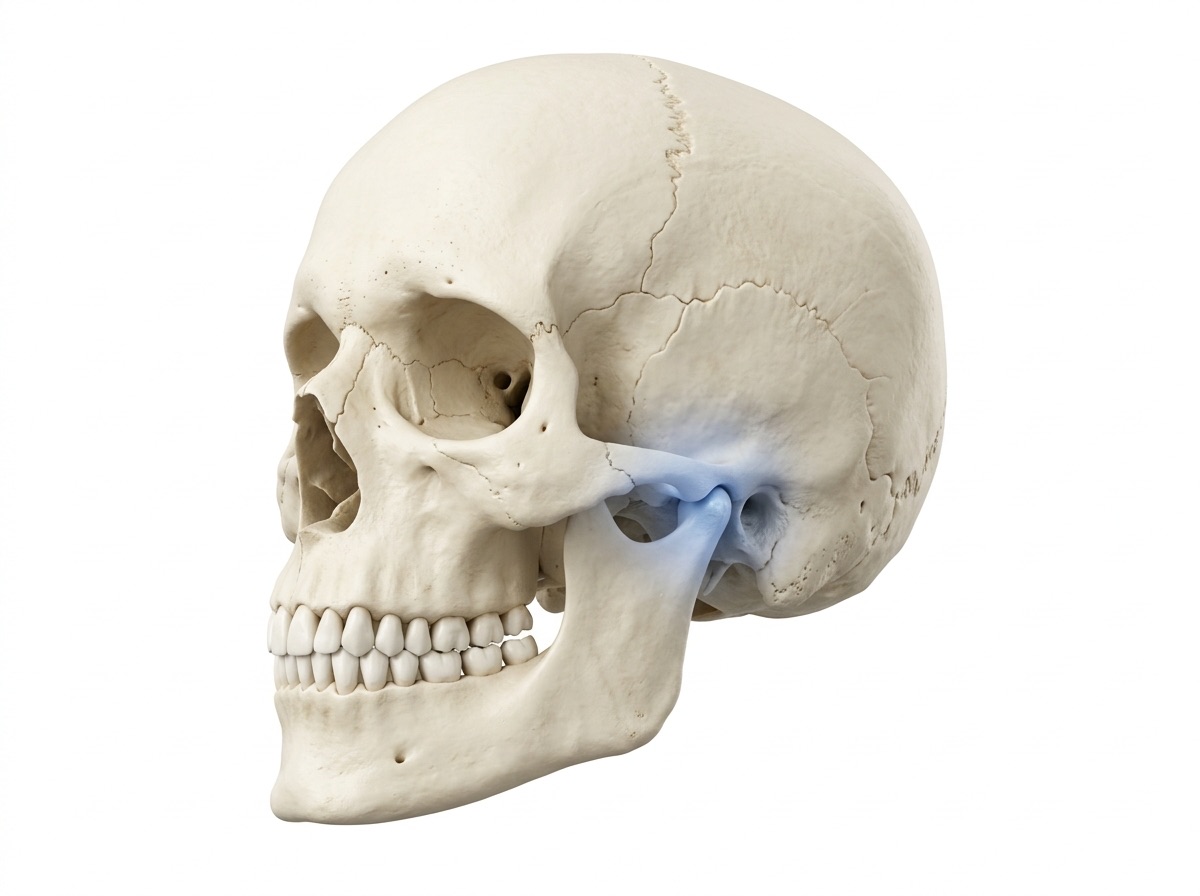
The temporomandibular joint (TMJ) is located where the lower jaw (mandible) attaches to the base of your skull. The TMJ is a unique joint called a ginglymoarthrodial joint. This allows your mouth to open and close and move forwards and backwards while also allowing movement from side to side.
A disc within the TMJ acts as a shock absorber and protects the bones from wear and tear. The Temporalis, Masseter and Pterygoid muscles attached to the TMJ control its position and jaw movements during talking, chewing and swallowing.
Symptoms
What are the symptoms of TMJ disorder?
A TMJ disorder can affect one or both joints. Damage may occur to the bones, disc, muscles or surrounding soft tissues. These disorders can cause pain, clicking, grinding, locking, dislocation of the joint, facial pain and/or headache. Symptoms may range from mild to severely debilitating. People may have a wide range of symptoms.
Signs and symptoms may include:
- Pain on opening, chewing and yawning, particularly when opening widely
- Limitation in opening of the mouth (trismus)
- A stuck or locked jaw (closed lock)
- Clicking, grinding or popping noises from the TMJ
- A limited range of jaw movement
- Swelling over the joint or face
- Pain in or around the ears and cheeks
- Headaches, migraines and nausea
- An uncomfortable bite
- Inability for the front teeth to close together
Assessment
How do you treat TMJ disorders?
At your initial consultation, Dr Tuckett will take a thorough history, perform a comprehensive examination and review any x-rays or CT scans which your Dentist or GP may have organised. He will advise if any further investigations are required.
Dr Tuckett will explain to you whether conservative management or surgical management is appropriate in your case. If indicated, he will discuss the options for surgical management of your condition and discuss the procedure and any associated risks in depth. He will also advise you of what to expect in the post-operative period.
Bring with you
Any X-rays or CT scans you already have, and your referral from your dentist or GP if you have one.
This page is general information, not a diagnosis. Jaw pain, clicking and headache can have different causes. Only an examination can tell you what's happening in your own joint.
Treatment without surgery
What does TMJ treatment involve?
As most TMJ disorders are temporary and do not usually worsen, simple and conservative treatment is often all that is required.
Many TMJ disorders can be treated without surgery by using pain relievers, anti-inflammatories or relaxing medications. This is usually in combination with physiotherapy and may include the use of a custom type of mouthguard called an occlusal splint.
A team approach to treatment is often needed. It may involve input from Dr Tuckett, your dentist and healthcare professionals such as a physiotherapist, pain specialist or psychologist.
Medication
Pain relievers, anti-inflammatories or relaxing medications.
Physiotherapy
Usually used together with medication, and may include a custom type of mouthguard called an occlusal splint.
A team approach
Often needed. It may involve Dr Tuckett, your dentist, and health professionals such as a physiotherapist, pain specialist or psychologist.
Surgical options
Four surgical procedures are commonly used to treat TMJ disorders
The basic aims of surgery are to reduce or eliminate symptoms and improve jaw function. Surgery is indicated only after all conservative options have been trialled or a significant internal problem with the joint has been diagnosed.
Arthrocentesis
A minor procedure to wash out the jaw joint, removing inflammatory mediators and injecting steroid or anti-inflammatory medication to reduce pain, swelling, inflammation and promote lubrication.
Arthroscopy
A minor procedure to wash out the jaw joint while also using an endoscopic camera to diagnose and treat the disease. In some cases special instruments can be inserted into the joint to manipulate the disc, break down adhesions and scar tissue or remove foreign bodies.
Discectomy
An open procedure to remove the diseased disc from the joint, replacing it with either your own tissue or donated cadaveric fascia to improve symptoms and function.
TMJ replacement
An open procedure to remove the diseased joint completely and replace it with a customised titanium joint.
Your surgery
Where will I have my TMJ surgery, and how long is the recovery?
In hospital, under general anaesthetic
All surgical TMJ procedures are performed in hospital under general anaesthetic. You will be asleep for the duration of the procedure.
Admitted on the day
You will be admitted on the day of your procedure and usually will be discharged the same day for minor procedures or the next day for more involved procedures following review by Dr Tuckett.
Recovery is usually about two weeks
The postoperative recovery period varies among patients but is usually about two weeks. Although pain in the TMJ usually starts to subside within three days after surgery, swelling and discomfort may continue for a while. Swelling is normal after any surgery and usually lasts about two weeks.
Physiotherapy during healing
Physiotherapy, particularly jaw manipulation and exercise, is needed during the healing period.
After your procedure, Dr Tuckett will provide you with specific instructions regarding your post-operative care, general instructions are available here.
About risk. Any surgery carries risk. If surgery is indicated for you, Dr Tuckett will discuss the procedure and any associated risks in depth at your consultation, before you decide. If you're unsure, seek a second opinion.
For dentists and GPs
Referring a patient with a suspected TMJ disorder? Send it the way that suits your practice. Include any X-rays or CT scans you have organised.
- Online referral form
- Fax
- PDF referral
Questions
TMJ questions
What are the symptoms of a TMJ disorder?
A TMJ disorder can affect one or both joints and can cause pain, clicking, grinding, locking, dislocation of the joint, facial pain and headache. Symptoms range from mild to severely debilitating.
Do I need surgery for a TMJ disorder?
Not always. Many TMJ disorders can be treated without surgery. Surgery is indicated only after all conservative options have been trialled or a significant internal problem with the joint has been diagnosed.
What are the surgical options?
Four procedures are commonly used: arthrocentesis, arthroscopy, discectomy and TMJ replacement. Dr Tuckett explains which, if any, applies to your case at your consultation.
Where is TMJ surgery done?
All surgical TMJ procedures are performed in hospital under general anaesthetic. You're admitted on the day and usually discharged the same day for minor procedures or the next day for more involved procedures.
How long is recovery after TMJ surgery?
Recovery varies but is usually about two weeks. Pain in the joint usually starts to subside within three days, and swelling usually lasts about two weeks. Physiotherapy is needed during healing. See after surgery care for general instructions.
Book a jaw joint consultation
Call the rooms on (07) 3063 7675, or send an enquiry and the team will come back to you.