Home / Procedures / Orthognathic surgery
Oral and maxillofacial surgery · Brisbane
Orthognathic (corrective jaw) surgery
Orthognathic surgery is performed on the top and/or bottom jaw to improve the bite and the function of the jaws. It's planned carefully, and usually done alongside braces. Dr Tuckett takes you through each step, from the first consultation to your review after discharge. Consultations are held at each of his rooms.
Who it can help
Signs that may point to jaw surgery
Orthognathic surgery or corrective jaw surgery is performed to improve the occlusion (bite) and function of the jaws. This surgery is also sometimes performed for aesthetic reasons.
Orthognathic surgery may be performed on the top and/or bottom jaw(s). It is usually performed in conjunction with orthodontic treatment (braces) to align and straighten the teeth which allows a stable platform for surgery.
Symptoms and signs that may indicate a need for orthognathic surgery include the following:
- Small or "weak" chin/jaw
- A protruding jaw
- Difficulty chewing or biting food
- Sleep apnoea (breathing problems during sleep, such as snoring)
- Unbalanced facial appearance
- Open bite (space between upper and lower front teeth when the mouth is closed)
- Inability to make lips meet without effort
This list is general information, not a diagnosis. Whether surgery is suitable for you is something Dr Tuckett works out with you after examining you and reviewing your scans.
What it involves
From first consultation to review
Orthognathic surgery requires a significant amount of planning and Dr Tuckett will see you on several occasions.
Consultation
At your initial consultation, Dr Tuckett will take a thorough history, perform a comprehensive examination and review any x-rays which your Dentist or Orthodontist may have organised. He will arrange to take scans of your teeth.
Options and risks
Dr Tuckett will explain to you the options for surgical management of your condition and discuss the procedure and any associated risks in depth. He will discuss whether you would benefit from single or double jaw surgery. He will also advise you of what to expect in the post-operative period.
Planning
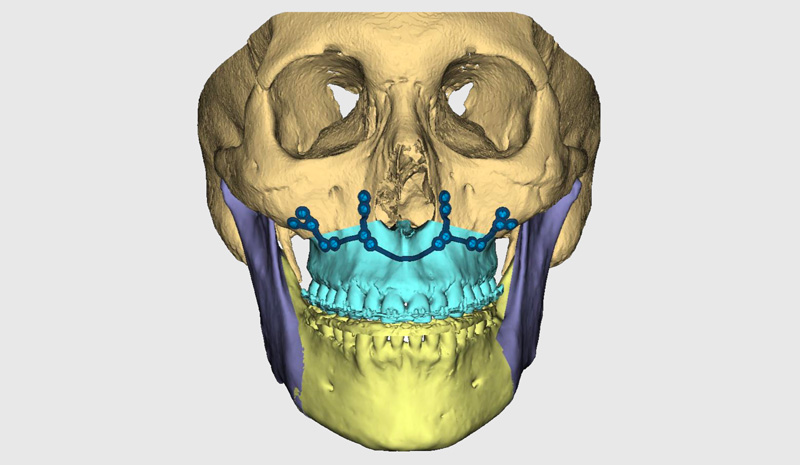
After your initial consult Dr Tuckett will review the digital impressions of your teeth and may arrange a CT Scan to assist in planning your custom designed and engineered bespoke titanium surgical guides and plates. Once the planning has been approved in consultation with your referring Orthodontist Dr Tuckett will arrange your surgical procedure date.
Surgery
Then, under general anaesthetic (while you are asleep) Dr Tuckett will carefully cut the bones and move the jaw(s) as required. Dr Tuckett will secure the bones in the new position with small bespoke titanium plates and screws.
Surgery and hospital stay
How long it takes, and how long you'll be in hospital
Depending on the complexity of the case, the surgery may take one hour (for a single jaw procedure) to four hours (for combined upper and lower jaw surgery). You will usually spend one to two nights in hospital while you recover.
Single jaw surgery
Surgery on the upper or the lower jaw may take about one hour.
- General anaesthetic
- Usually one to two nights in hospital
Combined upper and lower jaw surgery
Surgery on both jaws may take up to four hours.
- General anaesthetic
- Usually one to two nights in hospital
Once Dr Tuckett is happy with your progress you will be discharged home and he will review you in the rooms.
Recovery
After orthognathic surgery
Swelling and discomfort
Swelling is normal after orthognathic surgery and usually settles over a period of a few weeks. You will experience some discomfort especially in the first three days after surgery. Dr Tuckett and his anaesthetists will arrange a tailored analgesic plan to alleviate any discomfort.
Diet and activity
You must maintain a puree soft diet for 6 weeks after your operation. You will also need to avoid contact sports after your surgery, for 3 months, to allow sufficient time for bony healing.
Braces and elastics
Dr Tuckett may apply elastic bands to your braces to guide your teeth and retrain the muscles of the jaw following surgery. Your braces may remain for several months after your surgery to allow your Orthodontist to fine tune your new bite.
Time off
Our rooms will be able to provide a medical certificate so you can rest after your procedure.
Your instructions
After your procedure, Dr Tuckett will provide you with specific instructions regarding your post-operative care, general instructions are available here.
If you would like further information on orthognathic surgery, please visit the British Orthodontic Society website.
About risk. Dr Tuckett goes through the procedure and any associated risks in depth at your consultation, before you decide. This page is general information, not medical advice or a diagnosis. After surgery you'll receive specific instructions for your own recovery.
For dentists, orthodontists and GPs
Referring a patient who may need corrective jaw surgery? Send it the way that suits your practice. Include any X-rays your patient has had, and let Dr Tuckett know which orthodontist is involved, as the surgical plan is approved in consultation with them.
- Online referral form
- Fax
- PDF referral
Questions
Orthognathic surgery questions
What is orthognathic surgery?
Orthognathic surgery, also called corrective jaw surgery, is performed on the top and/or bottom jaw to improve the bite and the function of the jaws. It's usually done together with orthodontic treatment (braces).
Do I need braces before jaw surgery?
Orthognathic surgery is usually performed in conjunction with orthodontic treatment. The braces align and straighten the teeth, which gives a stable platform for surgery.
How long does the surgery take, and how long is the hospital stay?
Depending on the complexity of the case, surgery may take one hour for a single jaw procedure up to four hours for combined upper and lower jaw surgery. You'll usually spend one to two nights in hospital.
How long is recovery after orthognathic surgery?
Swelling is normal and usually settles over a few weeks. Discomfort is greatest in the first three days. You'll need a puree soft diet for 6 weeks and must avoid contact sports for 3 months, to allow time for bony healing.
How long will I have braces after surgery?
Your braces may remain for several months after surgery, so your orthodontist can fine tune your new bite. Dr Tuckett may also apply elastic bands to the braces to guide your teeth and retrain the muscles of the jaw.
Book an orthognathic surgery consultation
Call the rooms on (07) 3063 7675, or send an enquiry and the team will come back to you.