Home / Procedures / Bone grafting
Oral and maxillofacial surgery · Brisbane
Bone grafting
Sometimes there isn't enough bone in the jaw to place a dental implant safely. A bone graft adds bone quantity and quality so an implant can go in successfully. Dr Tuckett explains the options and plans the timing with you. Consultations are held at each of his rooms.
What it is
Building up bone so an implant has a solid base
In some patients who would like dental implants, there may be insufficient bone to safely place an implant. This may be due to previous tooth loss, trauma, pathology (cysts or tumours), congenital deformity such as cleft lip or palate or as a result of ageing.
In such cases, bone grafting will be performed to improve the available bone quantity and quality to enable successful implant placement.
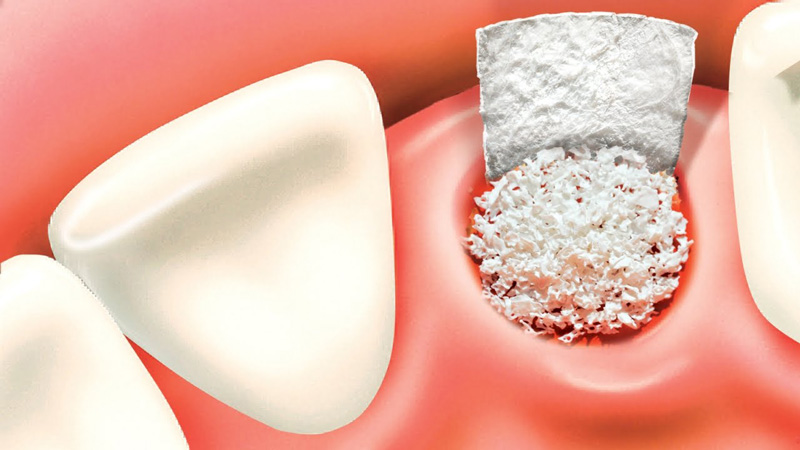
Bone grafting is an all-inclusive term which may refer to socket preservation, ridge augmentation, or sinus lifts. Which one applies to you depends on your situation.
Socket preservation
This is a procedure where bone grafting is performed at the same time as the extraction of your tooth to preserve the bone height and volume, making dental implant placement safer and more predictable.
Ridge augmentation
This is a procedure used to increase the amount of bone you have in an area by adding extra bone to the area.
Sinus lift
This is performed in the top jaw to add bone height to safely place implants where it was previously unsafe or impossible to place. If a sinus lift is planned, read the sinus precautions.
Why it's needed
Why would I need a bone graft?
If you'd like a dental implant, there may be too little bone to place it safely. A graft improves the amount and quality of bone so that dental implants can be placed successfully.
Why there may not be enough bone
- Previous tooth loss
- Trauma
- Pathology, such as cysts or tumours
- A congenital deformity, such as cleft lip or palate
- Ageing
When the graft can happen
Depending on the situation, bone grafting may take place:
- At the time of tooth removal
- Months before the placement of dental implants to allow for adequate healing and to optimise aesthetics
- At the same time as implant placement
Graft material
Where the bone can come from
Historically, bone grafts were harvested from other areas of the patient's body. In cases of severe bone loss, bone may be harvested from sites such as the jaws, hip, lower leg (tibia) or outer skull. More recently, other options are more widely used including donated human bone and cow bone. These provide safe, effective alternatives without the risk and recovery associated with harvesting your own bone. Dr Tuckett will talk you through which one is best suited for you.
Allograft or xenograft
Donated human bone and cow bone, both sterilised and medical grade:
- Allograft: sterilised bone sourced from a person who has donated their bone for this purpose
- Xenograft: medical grade sterilised animal (usually cow) bone
Your own bone
Harvested from another area of your body, such as:
- The jaws
- The hip, lower leg (tibia) or outer skull, in cases of severe bone loss
Anaesthetic
Awake and numb, or asleep in hospital
It depends on how involved the procedure is.
Local anaesthetic
Some minor bone grafting procedures, particularly those occurring at the time of tooth removal, can be performed under local anaesthetic with injections to numb the teeth, gums and nearby structures so you do not feel any discomfort.
General anaesthetic
More involved procedures are performed in hospital under general anaesthetic. You will be asleep for the duration of the procedure. You will be admitted on the day of your procedure and usually will be discharged either the same day or the next day after review by Dr Tuckett.
Recovery
What to expect afterwards
After your procedure, Dr Tuckett will provide you with specific instructions regarding your post-operative care. The recovery time depends on your medical conditions, age, bone type, what graft was chosen and how extensive the surgery was to place your graft.
Discomfort
In most cases your discomfort should settle after 1-2 weeks.
Healing
The bone is left to heal for 3-6 months to provide a solid base for your implant.
Scan
Dr Tuckett will arrange a scan to assess bone healing and suitability for implants once your surgery and healing time are completed.
After your procedure, Dr Tuckett will provide you with specific instructions regarding your post-operative care, general instructions are available here. The instructions Dr Tuckett gives you personally are the ones to follow.
General information only. This page isn't medical advice and doesn't diagnose anything. Whether a graft is needed, which type and when depend on your own mouth, so that's decided with Dr Tuckett at your consultation. Surgery carries risk, and you should seek a second opinion if you're unsure.
For dentists and GPs
Referring a patient who needs bone for implants? Send it the way that suits your practice. Include imaging if you have it.
- Online referral form
- Fax
- PDF referral
Questions
Bone grafting questions
Why might I need a bone graft before a dental implant?
There may not be enough bone to place an implant safely. This can be due to previous tooth loss, trauma, pathology (cysts or tumours), a congenital deformity such as cleft lip or palate, or ageing. A graft improves the quantity and quality of bone available.
Where does the graft bone come from?
Historically, bone grafts were harvested from other areas of the patient's body. In cases of severe bone loss, bone may be harvested from sites such as the jaws, hip, lower leg (tibia) or outer skull. More recently, other options are more widely used, including donated human bone (allograft) and cow bone (xenograft). These provide safe, effective alternatives without the risk and recovery associated with harvesting your own bone.
Will I be asleep for bone graft surgery?
Some minor grafts, particularly those done when a tooth is removed, can be done under local anaesthetic. More involved procedures are done in hospital under general anaesthetic, and you're usually discharged the same day or the next day after review by Dr Tuckett.
How long does the bone take to heal?
The bone is left to heal for 3 to 6 months to provide a solid base for your implant. Dr Tuckett arranges a scan once surgery and healing time are complete to assess bone healing and suitability for implants.
How long is recovery after bone grafting?
It depends on your medical conditions, age, bone type, the graft chosen and how extensive the surgery was. In most cases discomfort settles after 1 to 2 weeks. Dr Tuckett gives you specific post-operative instructions.
Book a bone grafting consultation
Call the rooms on (07) 3063 7675, or send an enquiry and the team will come back to you.