Home / Procedures / Dentoalveolar surgery
Oral and maxillofacial surgery · Brisbane
Dentoalveolar surgery
Some conditions of the teeth, gums, jawbone and other soft tissues in the mouth need a specialist surgeon. Your dentist may refer you to Dr Tuckett for ongoing treatment. Consultations are held at each of his rooms.
What it covers
Conditions treated with dentoalveolar surgery
Conditions involving the teeth, gums, jawbone and other soft tissues within the mouth may require your Dentist to refer you to Dr Tuckett for ongoing treatment.
Preparing the mouth
Bone, gums and tooth position
- Removal of bony outgrowths (tori) from the Jaws or Palate
- Surgery to prepare the bone and gums for Implant, Crown or denture placement (Preprosthetic Surgery)
- Exposure and bonding of an impacted tooth to allow an Orthodontist to guide the tooth into its correct position in your smile.
Extractions
Teeth that need a surgeon
- Extraction of a brittle previously root canal treated tooth
- Extraction of teeth with multiple, large, curved roots
- Extraction of a tooth fused to the jawbone (ankylosis)
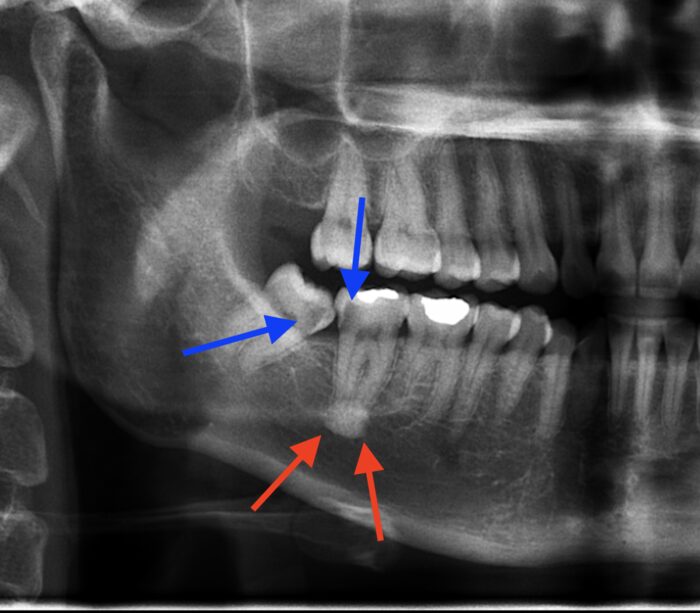
- Extraction of impacted or misplaced teeth
- Removal of retained tooth roots
How it's treated
Starting with a consultation
At your initial consultation, Dr Tuckett will take a thorough history, perform a comprehensive examination and review any x-rays of your mouth which your Dentist may have organised. He will advise if any further investigations are required.
Dr Tuckett will explain to you all the treatment options available, this may include conservative management or surgery under local or general anaesthetic. Dr Tuckett will discuss any procedures and any associated risks in depth. He will also advise you of what to expect in the post-operative period.
Bring with you
Any X-rays or scans you already have, a list of your medications, and your referral from your dentist if you have one.
Anaesthetic
Awake and numb, or asleep. There are two safe ways.
There are two safe ways to undertake dentoalveolar surgery: For simple procedures, a Local anaesthetic may be used. Which one is used depends on how complex the procedure is and what you'd prefer.
Local anaesthetic
This is where you are awake but numbed from pain and is generally only recommended in minor procedures.
General anaesthetic
For more complex procedures or in patients who prefer to be asleep, a general anaesthetic may be required. This is usually performed in a hospital where one of our experienced Specialist Anaesthetists attends the operation to put you to sleep while Dr Tuckett operates.
Recovery
What to expect afterwards
Most patients find some mild to moderate swelling and discomfort over the first three to four days. This usually settles over a week though some patients may take longer.
Usually patients will take pain killers for several days after surgery and we will tailor these to minimise any discomfort.
Depending on the complexity of the surgery, some people require only a few hours to recover and some require a week to recover from surgery. Our team can provide you with a medical certificate if required.
After your procedure, Dr Tuckett will provide you with specific instructions regarding your post-operative care, general instructions are available here.
Follow your own instructions. This page is general information. The written instructions Dr Tuckett gives you after your procedure are the ones to follow.
About risk. Dentoalveolar surgery is a very safe procedure. The risks involved will depend on your medical history, surgical condition and anatomy. Dr Tuckett will discuss a personalised risk profile with you at your pre-operative consultation appointment.
For dentists and GPs
Referring a patient who needs surgery on the teeth, gums or jawbone? Send it the way that suits your practice. Include the OPG or other imaging if you have it.
- Online referral form
- Fax
- PDF referral
Questions
Dentoalveolar surgery questions
What is dentoalveolar surgery?
It's surgery for conditions of the teeth, gums, jawbone and other soft tissues in the mouth. Your dentist may refer you to Dr Tuckett for treatment of these conditions.
Will I be awake for the surgery?
That depends on the procedure and on your preference. For simple procedures a local anaesthetic may be used, so you're awake but numbed from pain. For more complex procedures, or if you prefer to be asleep, a general anaesthetic may be required, usually in hospital with a specialist anaesthetist.
What happens at the first consultation?
Dr Tuckett takes a thorough history, performs a comprehensive examination and reviews any X-rays your dentist has organised. He'll advise if any further investigations are needed, then explain the treatment options and any associated risks.
How long is recovery?
Most patients have some mild to moderate swelling and discomfort over the first three to four days, which usually settles over a week, though some take longer. Depending on the complexity of the surgery, recovery can take a few hours or up to a week. The rooms can provide a medical certificate if required.
What are the risks?
The risks depend on your medical history, the condition being treated and your anatomy. Dr Tuckett will discuss a personalised risk profile with you at your pre-operative consultation.
Book a dentoalveolar surgery consultation
Call the rooms on (07) 3063 7675, or send an enquiry and the team will come back to you.