Home / Patient information / Dentist or surgeon
Dentist, oral surgeon or maxillofacial surgeon: what's the difference?
The titles sound alike. The training behind them isn't. Here's how they differ in Australia, and how to check who you're seeing.
If you've been told you need "an oral surgeon", you might wonder how that differs from your dentist, and why some surgeons are called "oral and maxillofacial surgeons".
The short answer
- A dentist looks after your teeth and gums day to day.
- An oral surgeon is a dentist who has completed specialist surgical training in dentistry.
- An oral and maxillofacial surgeon has both a dental and a medical degree, plus specialist surgical training in both. They treat a wider range of conditions of the jaws, mouth and face.
All three are regulated by the Dental Board of Australia, and oral and maxillofacial surgeons by the Medical Board as well. The training details below are from the Dental Board's own description.
Dentist
A dentist holds a dental degree and is registered with the Dental Board of Australia. Dentists do check-ups, fillings, crowns, dentures and cleaning, and many place implants or remove teeth.
When a tooth or jaw problem needs surgery beyond what they offer, your dentist will usually refer you to a surgeon. That's normal, and most patients Dr Tuckett sees come this way.
"Dental surgeon"
"Dental surgeon" isn't a separate registration. It's often used as another word for dentist, and some dentists use it to describe themselves. On its own it doesn't tell you whether someone has specialist surgical training. What matters is how they're registered, which you can check (see below).
Oral surgeon
The Dental Board describes an oral surgeon as a dentist and dental specialist. They hold a dental degree and complete three years of specialist dental training. They can be registered as a dentist and a dental specialist, but not as a medical practitioner.
Oral and maxillofacial surgeon
The Dental Board describes an oral and maxillofacial surgeon as a dentist, medical practitioner and dental and medical specialist. They hold both a dental and a medical degree, plus four years of specialist medical and dental training. They treat a wider range of conditions, including disease, injuries and defects of the jaws and face.
In practice that can include wisdom teeth and dental implants, bone grafting, corrective jaw surgery, facial fractures, cysts and tumours of the jaw, and surgery on the jaw joint. "Maxillofacial" just means the jaws and face. "Maxillofacial surgeon" is the shortened form many people search for, but the full title is the protected one.
Other names you might see
"Maxfax" is common shorthand for maxillofacial, and you may also see "facio-maxillary surgeon" or "facial surgeon". People also say "jaw doctor" or "mouth doctor". Those everyday phrases aren't titles, so they don't tell you how someone is trained or registered. Check the register (see below).
Side by side
| Dentist | Oral surgeon | Oral and maxillofacial surgeon | |
|---|---|---|---|
| Degrees | Dental | Dental | Dental and medical |
| Specialist training | None required | Three years, dental | Four years, medical and dental |
| Registered as | Dentist | Dentist and dental specialist | Dentist, dental specialist, medical practitioner and medical specialist |
| Typical work | General dental care | Surgery in and around the teeth and jaws | Surgery of the teeth, jaws, mouth and face, including disease, injury and defects |
Which one do you need?
- Check-ups, fillings, a cracked tooth: your dentist.
- A straightforward extraction or a single implant: often your dentist, or an oral surgeon.
- Impacted wisdom teeth, bone grafts, or a complex implant case: your dentist may refer you to a surgeon. See wisdom teeth and dental implants.
- Jaw alignment, facial injuries, cysts, jaw joint problems: an oral and maxillofacial surgeon. See orthognathic surgery.
If you're not sure, ask your dentist or GP. They can tell you who is the right person for your case.
How to check who you're seeing
"Oral surgeon" and "oral and maxillofacial surgeon" are protected titles. Only someone who is trained, qualified and registered can use them. You can check any practitioner on the Ahpra register of practitioners. It shows whether their registration is current and which specialties they hold.
About Dr Tuckett
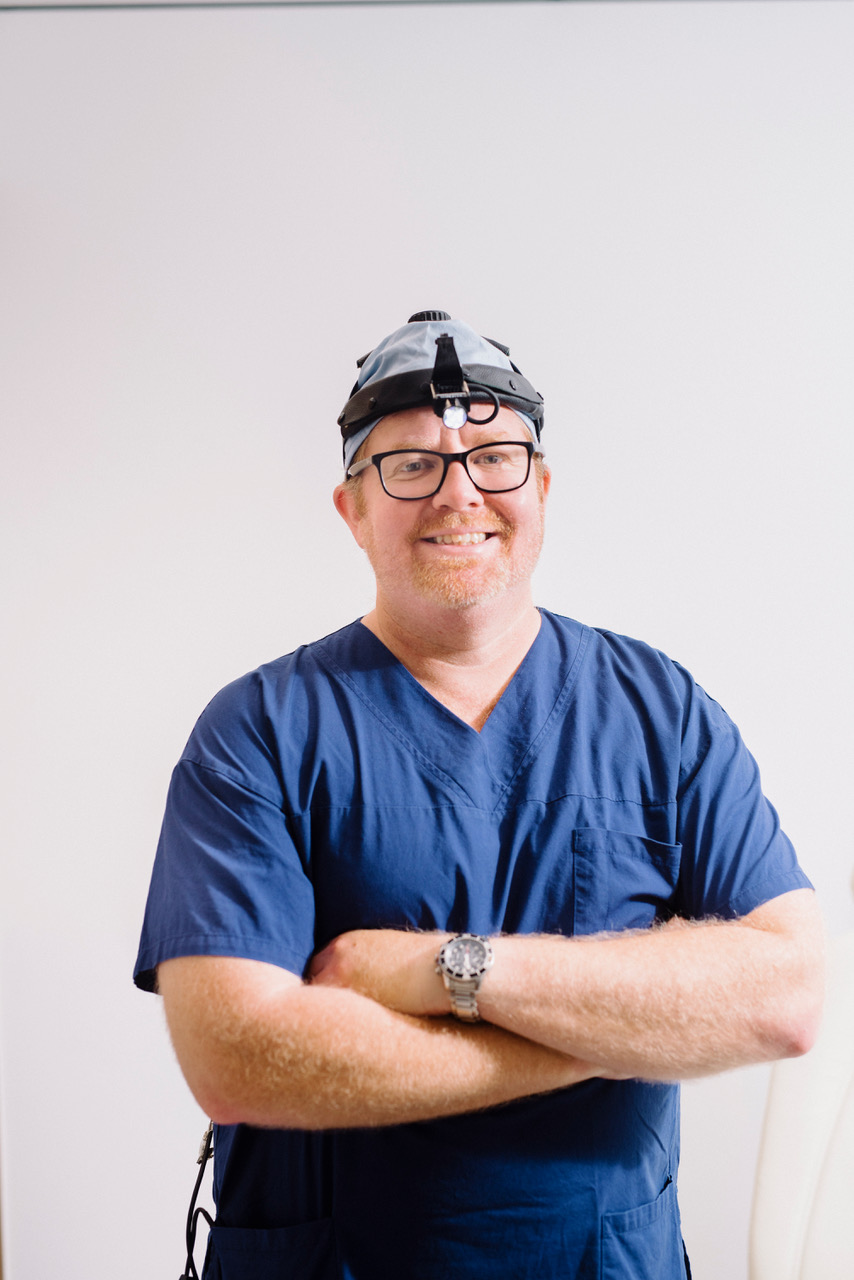
Dr Joel Tuckett is an oral and maxillofacial surgeon. He holds MBBS and BDSc (Hons) degrees and a Fellowship of the Royal Australasian College of Dental Surgeons in oral and maxillofacial surgery (FRACDS (OMS)). You can read more on the about page. If you're a dentist or GP and would like to refer a patient, see refer a patient.
At your consultation Dr Tuckett explains the options and risks. Surgery carries risk, and you should seek a second opinion if you're unsure.
Questions
Common questions
Is an oral surgeon a dentist?
Yes. In Australia an oral surgeon is a dentist who has completed specialist dental surgical training.
Is an oral and maxillofacial surgeon a dentist or a doctor?
Both. They hold dental and medical degrees and can be registered in both professions.
Do I need a referral?
Most patients are referred by their dentist or GP. Call the rooms on (07) 3063 7675 and they'll tell you what they need.
Is "dental surgeon" the same as an oral surgeon?
Not necessarily. "Dental surgeon" is often used for a dentist. Check the registration rather than the wording.
Book a consultation
Call the rooms on (07) 3063 7675, or send an enquiry and the team will come back to you.